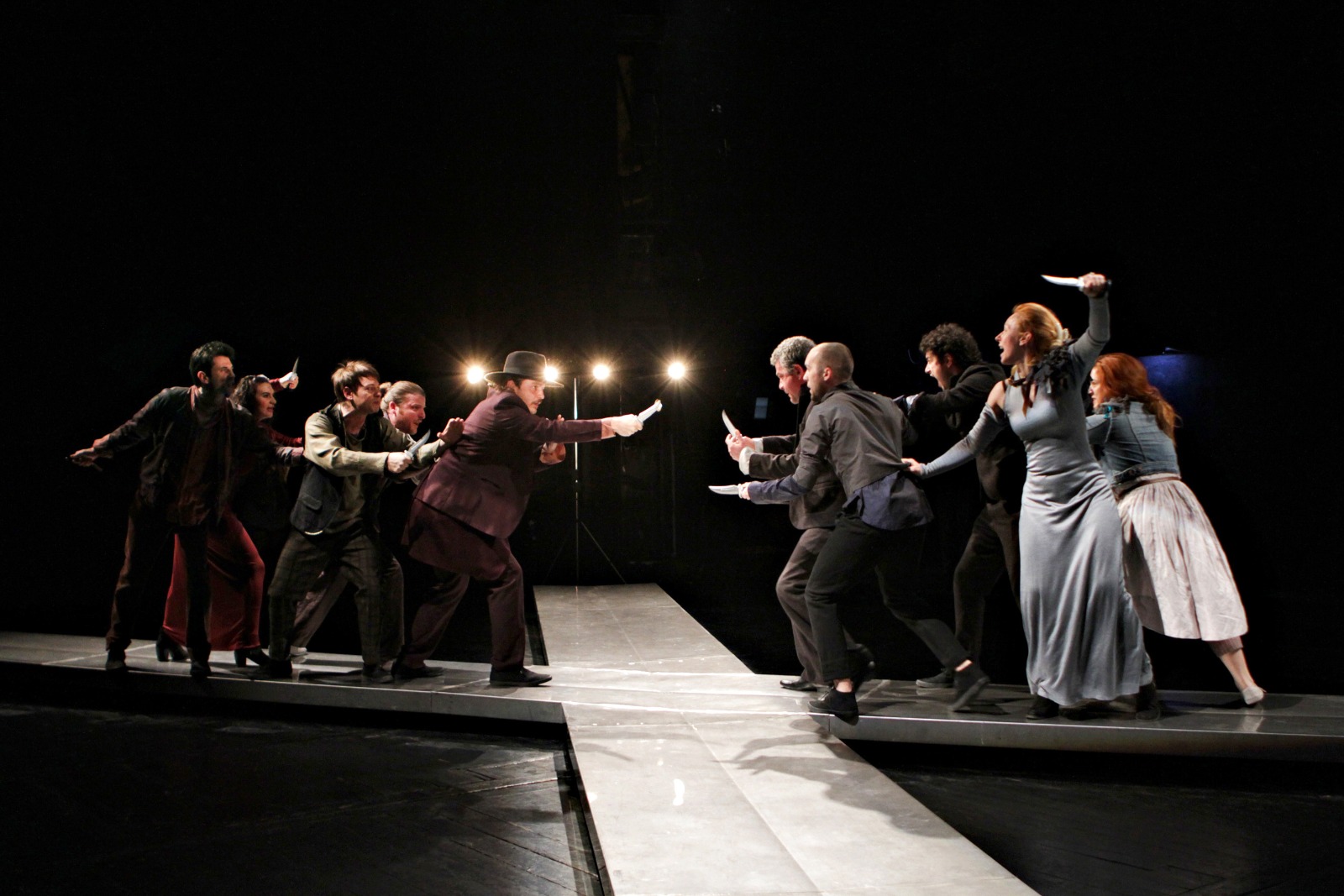
By William Shakespeare
Director: Miki Manojlovic
Serbian Translation: Živojin Simić and Sima Pandurović
Albanian Translation: Fan. S. Noli and Alqi Kristi
Cast:
ESCALUS, Prince of Verona - Mensur Safciu
PARIS, Kinsman to the Prince - Nikola Rakočević
MONTAGUE - Armend Ismajli
CAPULET - Nebojša Glogovac
ROMEO, Son to Montague - Alban Ukaj
MERKUTIO, Kinsman to the Prince and Friend to Romeo - Goran Jevtić
BENVOLIO, Nephew to Montague and Friend to Romeo - Armend Baloku
TYBALT, Nephew to Lady Capulet - Faris Berisha
LAWRENCE, a friar, - Uliks Fehmiu
LADY MONTAGUE, Mother to Romeo - Edona Reshitaj
LADY CAPULET, Mother to Juliet - Nataša Tapušković
JULIET, Daughter to Capulet - Milica Janevski/Jovana Gavrilović
NURSE TO JULIET - Anita Mačić
PROLOGUE/NARRATOR - Arta Selimi
Musicians:
Clavinova / Bass Guitar -Vladimir Pejković
Saxophone / Melodica - Dušan Petrović
Electric Guitar - Damjan Babić
Electronic Drums - Nemanja Aćimović
Set Designer: Branko Hojnik
Costume Designer: Zora Mojsilović
Choreographer: Sonja Vukićević
Composer: Vladimir Pejković
Spatial Design Concept: Miki Manojlovic
Dramaturg: Olga Dimitrijević
Assistant Director: Bojana Lazić
Stage Manager / Prompter: Dušan Pavlović
Lighting Designer: Radomir Stamenković
Sound Designer: Dobrivoje Milijanović
Special Effects: Miroslav Lakobrija
Photographers: Jelena Stanković / Pablo Fero
Production: Radionica Integracije and Qendra Multimedia
Co-producer: Jeton Neziraj
Production Team: Suzana Ilievska / Lendita Idrizi / Jelisaveta Miletić
Technical Department: Bora Đorđević
Translators on the Project: Marija Popović / Damjan Filipović
Visual Identity: Vjeko Sumić
Executive production: Milica Milić
Premiere: April 5th 2015, National Theatre in Belgrade, Main Stage